Ripple is making a move that could quietly reshape how institutions interact with blockchain technology.
While much of the crypto market remains distracted by meme coin volatility and short-term price swings, Ripple is doubling down on infrastructure — and this latest XRPL upgrade may be one of its most important strategic plays yet.
The company behind XRP is pushing the XRP Ledger deeper into enterprise territory with new upgrades designed to improve scalability, tokenization, interoperability, and institutional usability.
This isn’t just another blockchain update.
It’s part of a much bigger race to become the backbone of next-generation finance.
Why This Matters Right Now
The blockchain industry is entering a completely different phase.
For years, crypto was largely driven by speculation. But now, major financial institutions are actively exploring:
- Tokenized assets
- Stablecoin payments
- Cross-border settlement
- On-chain finance infrastructure
- Blockchain-based liquidity systems
And they need networks capable of handling enterprise-level demand.
That’s where Ripple sees its opportunity.
The XRP Ledger has long positioned itself as a fast, low-cost blockchain optimized for payments. But Ripple’s newest upgrades signal an expansion far beyond remittances.
The company is now targeting a much larger market:
Institutional blockchain infrastructure.
Timing is critical because:
- Global banks are experimenting with tokenized finance
- Stablecoin adoption is exploding
- Regulatory clarity around digital assets is improving
- Real-world asset tokenization is becoming a trillion-dollar conversation
Ripple wants XRPL at the center of that transformation.
The Breakdown: What Ripple Is Upgrading on XRPL
Ripple’s latest enterprise-focused enhancements are designed to make the XRP Ledger more attractive to businesses, fintech firms, and institutional players.
Here’s what stands out.
- Improved Scalability for Institutional Demand
Institutions don’t care about hype.
They care about:
- Reliability
- Speed
- Low operational costs
- Consistent network performance
Ripple’s upgrades aim to strengthen XRPL’s ability to process large transaction volumes while maintaining near-instant settlement speeds.
That matters for:
- Banks
- Payment providers
- Enterprise fintech applications
- Global remittance systems
As blockchain usage grows, scalability becomes one of the biggest competitive advantages.
- Tokenization Is Becoming a Core Focus
One of the most important trends in crypto right now is tokenization.
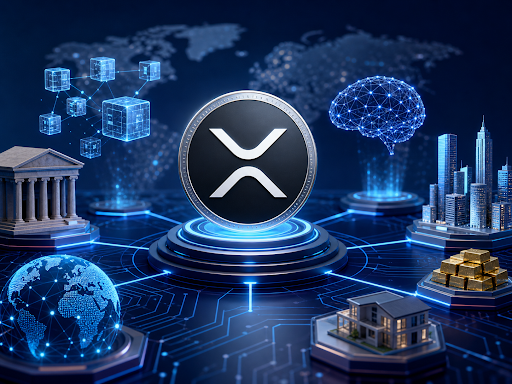
This means turning real-world assets into blockchain-based digital assets, including:
- Real estate
- Bonds
- Stocks
- Commodities
- Stablecoins
Ripple is positioning XRPL as infrastructure for this emerging financial layer.
The logic is simple:
If trillions of dollars eventually move on-chain, institutions will need scalable networks designed for compliance and efficiency.
Ripple wants XRPL to become one of those networks.
- Enterprise Interoperability Is a Huge Priority
The future of finance likely won’t exist on one blockchain.
Institutions will require systems capable of interacting across:
- Multiple blockchains
- Traditional banking rails
- Stablecoin ecosystems
- Centralized financial infrastructure
Ripple’s upgrades increasingly focus on interoperability — a critical but often overlooked component of institutional adoption.
Because in reality, enterprises care less about “crypto ideology” and more about seamless functionality.
- Stablecoin Infrastructure Is Quietly Expanding
Ripple’s growing stablecoin strategy is becoming increasingly important to the XRPL ecosystem.
Stablecoins are rapidly evolving into:
- Payment rails
- Settlement layers
- Digital dollar infrastructure
- Cross-border liquidity solutions
The latest XRPL enhancements appear designed to support that evolution.
And that could significantly increase network utility over time.
The Bigger Insight Most People Are Missing
Most crypto traders still evaluate XRP almost entirely through price action.
But Ripple is playing a much longer game.
The real strategy isn’t just about retail adoption.
It’s about becoming infrastructure for institutional finance.
That’s a completely different market.
While many crypto projects chase hype cycles, Ripple continues focusing on:
- Banking relationships
- Payment systems
- Enterprise-grade technology
- Regulatory positioning
- Financial infrastructure partnerships
This approach may look slower compared to meme-driven ecosystems.
But infrastructure narratives often become far more powerful over time.
The biggest winners in tech history weren’t always the loudest companies.
They were often the firms building the rails everyone else eventually relied on.
Why XRPL’s Position Is Becoming More Interesting
The XRP Ledger occupies a unique place in crypto.
It combines:
- Fast settlement
- Low transaction fees
- Energy efficiency
- Established institutional branding
- Regulatory experience
That combination becomes increasingly valuable as governments and financial firms move deeper into blockchain adoption.
And unlike newer chains still trying to prove themselves, Ripple already has years of enterprise relationships globally.
That network effect matters.
A lot.
Could Ripple Become a Major Institutional Blockchain Player?
That’s the question the market is starting to ask more seriously.
Because if tokenization and stablecoin adoption accelerate globally, institutions will need:
- High-speed settlement layers
- Compliance-friendly infrastructure
- Scalable blockchain systems
- Trusted enterprise partners
Ripple is clearly trying to position XRPL as part of that future.
Whether it fully succeeds remains uncertain.
But one thing is becoming difficult to ignore:
Ripple is no longer just competing in the crypto market.
It’s competing for relevance in the future architecture of global finance.
Final Takeaway
Ripple’s latest XRPL enterprise-grade upgrades are about much more than blockchain development.
They represent a broader shift happening across the entire financial industry.
Crypto is slowly evolving from speculative assets into operational infrastructure.
And Ripple appears determined to become one of the companies powering that transition.
For investors, builders, and institutions alike, the bigger opportunity may not simply be XRP’s short-term price movement.
It may be the growing role XRPL could play in the next generation of global financial systems.
Because while most of the market watches volatility…
Ripple keeps building the rails.