Ripple is doubling down on its long-standing mission: transforming global payments.
In a recent strategic update, Ripple executives outlined a bold 2026 vision centered on integrating stablecoins into real-world payment flows and expanding institutional finance use cases. The message was clear — the future of crypto isn’t just speculation. It’s infrastructure.
At the heart of this roadmap lies the XRP Ledger (XRPL) and its evolving role in powering tokenized assets, stablecoin issuance, and cross-border settlement.
So what does this mean for XRP, financial institutions, and the broader crypto market in 2026?
Let’s break it down.
A Shift From Hype to Utility
For years, Ripple has positioned itself differently from many blockchain projects. Rather than focusing purely on retail adoption or decentralized experimentation, Ripple has targeted banks, payment providers, and enterprise partners.
Now, Ripple’s 2026 vision sharpens that focus.
Executives emphasized that stablecoins are moving beyond crypto trading platforms and into practical financial infrastructure. The goal is simple: integrate blockchain-based stable assets directly into existing payment rails.
In other words, bridge traditional finance and digital assets — seamlessly.
Why Stablecoins Matter in Ripple’s Strategy
Stablecoins have become one of the fastest-growing sectors in crypto. Unlike volatile tokens, stablecoins are designed to maintain a consistent value, often pegged to fiat currencies.
Ripple’s roadmap highlights several use cases:
- Cross-border payment settlement
- Liquidity management for institutions
- Tokenized real-world assets
- Faster remittance corridors
- Treasury operations for enterprises
By leveraging XRPL stablecoins, Ripple aims to reduce friction in global transactions while maintaining compliance and efficiency.
This is where institutional crypto finance 2026 begins to take shape.
Monica Long’s Emphasis on Real Payment Flows
Ripple President Monica Long stressed that the next phase of blockchain adoption must move beyond theoretical applications.
Her message centered on integration — not disruption.
Rather than replacing traditional payment systems entirely, Ripple’s strategy focuses on embedding blockchain capabilities within existing financial infrastructure.
That includes:
- Enhancing liquidity between currencies
- Reducing settlement times
- Lowering transaction costs
- Increasing transparency in cross-border flows
The emphasis is clear: real-world payments, not just digital asset speculation.
The Role of the XRP Ledger (XRPL)
The XRP Ledger developments planned for 2026 are designed to support this broader vision.
Key areas of focus include:
- Enhanced support for tokenized assets
- Improved smart contract functionality
- Institutional-grade compliance tools
- Privacy and scalability improvements
XRPL’s low transaction costs and fast settlement times make it particularly suitable for stablecoin-based transactions.
As blockchain payments infrastructure evolves, Ripple is positioning XRPL as a foundational layer for tokenized finance.
Institutional Adoption Is the Core Focus
While retail interest remains important, Ripple’s roadmap underscores institutional XRP adoption as a primary growth driver.
Financial institutions require:
- Regulatory clarity
- Security and reliability
- Predictable transaction costs
- Seamless integration with legacy systems
Ripple’s approach aims to satisfy these requirements without sacrificing blockchain efficiency.
If successful, this strategy could significantly expand XRP’s role in global finance.
What This Means for XRP
Although stablecoins may capture headlines, XRP remains central to Ripple’s ecosystem.
XRP functions as:
- A bridge asset for liquidity
- A settlement layer
- A transaction fee mechanism
- A utility token within XRPL
As institutional participation grows and stablecoin integration expands, demand for blockchain settlement infrastructure may increase.
While price predictions are always speculative, ecosystem growth often strengthens long-term fundamentals.
The Bigger Picture: Tokenized Finance in 2026
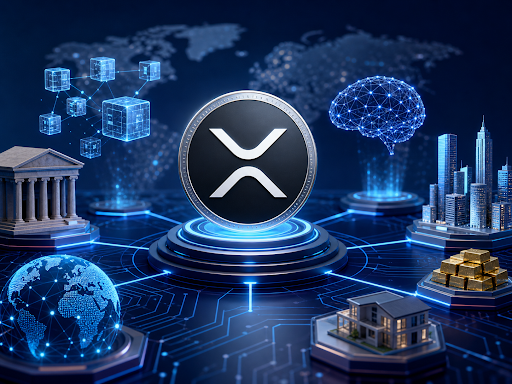
Ripple’s 2026 roadmap reflects a broader trend across the financial industry — the tokenization of assets.
From stablecoins and bonds to real estate and commodities, blockchain is increasingly used to represent traditional assets digitally.
Ripple is positioning itself as an infrastructure provider within this transformation.
The goal is not short-term market hype but long-term financial integration.
Challenges Ahead
Despite the ambitious vision, challenges remain:
- Regulatory changes across jurisdictions
- Competition from other blockchain networks
- Institutional risk aversion
- Global liquidity conditions
Adoption at scale requires coordination, compliance, and trust.
However, Ripple’s steady institutional focus suggests a long-term strategy rather than reactive positioning.
Final Thoughts
Ripple’s 2026 vision signals a maturation phase for the crypto industry.
Stablecoins powering real-world payments and institutional finance represent a practical evolution of blockchain technology. Instead of replacing banks, Ripple aims to empower them with faster, more efficient infrastructure.
If integration continues expanding across global payment rails, XRP and the XRPL ecosystem could play a significant role in the next phase of digital finance.
The era of speculative experimentation may be giving way to something more durable: blockchain as financial infrastructure.
And Ripple intends to be at the center of that transformation.