XRP remains one of the most discussed cryptocurrencies in the market — but many investors still ask a simple question: How does the XRP Ledger actually work, and why does it matter in 2026?
While newer blockchains focus heavily on DeFi, NFTs, or memecoins, XRP was built with a different purpose: fast, low-cost global payments. Over the years, however, the XRP Ledger (XRPL) has evolved far beyond its original use case.
In this guide, we break down XRP in clear, simple terms — how it works, what makes it different, and why it still plays a key role in the blockchain ecosystem today.
What Is XRP?
XRP is the native digital asset of the XRP Ledger, an open-source blockchain launched in 2012.
Unlike Bitcoin or Ethereum, XRP was designed specifically to:
- Enable fast cross-border payments
- Reduce transaction costs
- Provide liquidity for financial institutions
- Settle transactions in seconds
XRP acts as a bridge currency, helping move value between different fiat currencies or digital assets.
How the XRP Ledger Works
The XRP Ledger operates differently from traditional proof-of-work or proof-of-stake blockchains.
1. XRP Uses a Unique Consensus Mechanism
Instead of mining (like Bitcoin) or staking (like Ethereum), XRPL uses the XRP Ledger Consensus Protocol.
Here’s how it works:
- Independent validators confirm transactions
- Validators agree on transaction order
- Consensus is reached every 3–5 seconds
- Once confirmed, transactions are final
There is no mining and no energy-intensive competition. This makes XRPL:
- Fast
- Energy-efficient
- Low-cost
- Transactions Are Extremely Cheap
One of XRP’s biggest advantages is its low transaction fees.
Typical XRP transaction fees:
- Fractions of a cent
- Finalized in seconds
- No congestion spikes like some other networks
This cost efficiency makes XRP attractive for high-volume transfers.
- Built-In Features of the XRP Ledger
Unlike many blockchains that rely on third-party smart contracts, XRPL includes several native features:
- Decentralized exchange (DEX)
- Token issuance capabilities
- Escrow functionality
- Multi-signature accounts
- Payment channels
In 2026, XRPL expanded further with smart contract functionality and sidechain integrations, allowing greater programmability without sacrificing speed.
XRP vs Bitcoin and Ethereum
Understanding XRP becomes easier when compared to other major cryptocurrencies.
| Feature | XRP | Bitcoin | Ethereum |
| Consensus | Validator-based | Proof of Work | Proof of Stake |
| Speed | 3–5 seconds | ~10 minutes | ~12 seconds |
| Fees | Very low | Can be high | Variable |
| Energy Use | Minimal | High | Moderate |
| Primary Focus | Payments & liquidity | Store of value | Smart contracts |
XRP focuses on efficiency and liquidity, rather than decentralization maximalism or complex programmable ecosystems.
Why XRP Matters in 2026
After more than a decade in operation, XRP continues to remain relevant for several reasons.
1. Cross-Border Payments Still Need Innovation
Global remittances remain expensive and slow in traditional banking systems.
XRP offers:
- Instant settlement
- Low transaction costs
- On-demand liquidity
This positions XRP as infrastructure rather than speculation alone.
- Institutional Interest Is Growing
With regulatory clarity improving in many regions, institutional players are increasingly exploring blockchain-based settlement systems.
XRPL’s stability, predictable performance, and long operational history make it attractive for financial infrastructure use cases.
- Smart Contract and DeFi Expansion
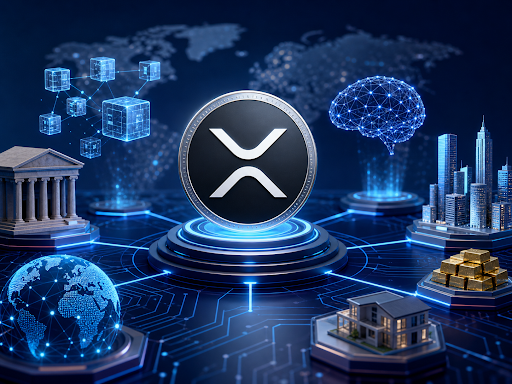
In 2026, XRPL moved beyond payments. New native contract milestones and sidechain integrations allow:
- DeFi protocols
- Tokenized assets
- Stablecoins
- Cross-chain interoperability
This expansion broadens XRP’s long-term utility.
- Energy Efficiency Matters
As sustainability concerns grow globally, XRPL’s low-energy consensus model gives it an advantage over more energy-intensive networks.
Environmental considerations are becoming increasingly important in institutional adoption decisions.
Is XRP a Good Investment?
Whether XRP is a good investment depends on:
- Market conditions
- Regulatory environment
- Adoption growth
- Personal risk tolerance
XRP’s value is tied to network utility, liquidity demand, and broader crypto market trends.
Like all cryptocurrencies, it remains volatile. However, its long-standing infrastructure focus gives it a unique position in the market.
Risks to Consider
Despite its strengths, XRP faces challenges:
- Competition from other payment-focused blockchains
- Regulatory uncertainty in some regions
- Market volatility
- Dependence on ecosystem growth
Understanding both potential and risk is essential before investing.
The Bigger Picture
The XRP Ledger represents one of the earliest attempts to modernize global financial infrastructure using blockchain technology.
While many projects have come and gone, XRPL continues evolving — integrating smart contracts, expanding developer tools, and improving interoperability.
In 2026, XRP is no longer just a “bank coin.” It is becoming part of a broader programmable finance ecosystem.
Final Thoughts
XRP explained simply: it is a fast, low-cost digital asset designed to move value efficiently across borders.
The XRP Ledger works through a validator-based consensus model that prioritizes speed, reliability, and cost efficiency. In 2026, its expanding smart contract support and institutional interest make it more relevant than ever.
Whether you’re a beginner or a seasoned crypto investor, understanding how XRPL works provides insight into one of the longest-running blockchain networks still active today.
As the blockchain industry matures, infrastructure-focused networks like XRP may continue playing a critical role in bridging traditional finance and digital assets.