Skip to content
Something important is happening beneath the surface of the XRP ecosystem—and most of the market hasn’t fully priced it in yet. While attention remains fixed on price movements and regulatory headlines, the XRP Ledger (XRPL) is quietly evolving. Its latest upgrade isn’t just technical housekeeping. It’s a deliberate step toward turning XRP into something far bigger than a payments-focused asset.
The shift? XRP is moving deeper into DeFi.
CONTEXT: Why This Matters Right Now
The broader crypto market is entering a transitional phase.
Liquidity is slowly returning after a cautious period driven by macro uncertainty—interest rates, inflation pressures, and tightening financial conditions have kept risk assets in check. At the same time, institutional interest hasn’t disappeared. It’s simply become more selective. In this environment, narratives alone don’t move markets anymore. Utility does. Ethereum built its dominance on DeFi. Solana gained traction through speed and developer activity. XRP, historically tied to cross-border payments, has lagged in this category.
That’s what makes this upgrade significant. It signals that Ripple is no longer content with a single-use narrative. Instead, it’s positioning XRPL to compete in one of crypto’s most valuable sectors.
BREAKDOWN: What Actually Changed
This upgrade introduces a series of enhancements that collectively reshape what’s possible on the XRP Ledger.
Here’s what stands out:
Native DeFi functionality is expanding
XRPL is becoming more compatible with decentralized finance use cases. Developers can now build more complex financial applications directly on the network.
Improved tokenization capabilities
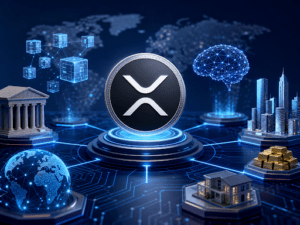
The ledger is increasingly optimized for real-world assets—think tokenized funds, bonds, and commodities. This aligns with growing institutional interest in asset tokenization.
Enhanced liquidity mechanisms
New features are making it easier to manage liquidity pools and facilitate smoother asset exchange within the ecosystem.
Developer accessibility is improving
With better tools and infrastructure, XRPL is lowering the barrier to entry for builders—something critical for ecosystem growth.
Network efficiency upgrades
Performance improvements continue to reinforce XRPL’s strengths: low fees, fast settlement, and scalability. Individually, these changes may seem incremental. Together, they represent a strategic pivot.
INSIGHT: What Most People Are Missing
Here’s the part the market tends to overlook.
This isn’t about XRP “catching up” to DeFi—it’s about redefining how DeFi can integrate with real-world finance.
Most DeFi ecosystems are still heavily retail-driven, built around speculative trading, yield farming, and liquidity incentives. XRPL’s approach appears different. It’s aligning DeFi with institutional use cases.
That includes:
Tokenized real-world assets
Regulated financial products
Cross-border settlement integration
Stablecoin infrastructure
If this direction holds, XRPL could carve out a niche that other chains haven’t fully captured—a bridge between traditional finance and decentralized infrastructure. That’s a fundamentally different value proposition, and it may take time for the market to recognize it.
TAKEAWAY: What This Means Going Forward
This upgrade won’t trigger an immediate price surge. Infrastructure rarely does.
If XRPL successfully attracts developers and real-world applications, XRP’s role could expand beyond payments into a broader financial ecosystem. That shift would alter how the asset is valued—moving from narrative-driven speculation toward utility-based demand. For investors, the key isn’t short-term reaction. It’s watching executions.
Are developers building?
Are institutions adopting?
Is network activity increasing?
Those are the signals that matter now, because in crypto, price eventually follows infrastructure, and XRP just took a step toward building something much bigger.