Ripple has outlined a clear and deliberate DeFi roadmap for the XRP Ledger (XRPL), and the message is unmistakable: the next phase of decentralized finance is not just for retail users.
Instead of chasing short-term trends, Ripple’s vision for XRPL DeFi centers on institutional finance, regulated environments, and tokenized real-world assets. This marks a notable shift from the experimental DeFi models that dominated earlier crypto cycles.
As global finance increasingly explores blockchain infrastructure, Ripple’s roadmap positions XRPL as a bridge between traditional institutions and decentralized systems.
Why Ripple Is Taking an Institutional-First DeFi Approach
Decentralized finance has grown rapidly, but much of its early growth came with trade-offs — volatility, regulatory uncertainty, and fragmented liquidity.
Ripple’s approach acknowledges a key reality:
Institutions require compliance, reliability, and predictable infrastructure.
By designing XRPL DeFi with institutional standards in mind, Ripple aims to unlock participation from:
- Banks and payment providers
- Asset managers and custodians
- Enterprises exploring blockchain settlement
- Issuers of tokenized financial products
This focus could reshape how DeFi evolves over the next several years.
Core Pillars of the XRPL DeFi Roadmap
1. Tokenized Real-World Assets
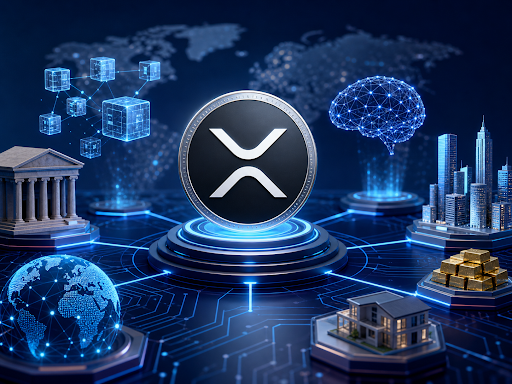
One of the central themes of Ripple’s roadmap is tokenization. This includes representing real-world assets — such as bonds, funds, and commodities — directly on the XRP Ledger.
Tokenized assets offer:
- Faster settlement
- Improved transparency
- Fractional ownership
- Reduced operational costs
For institutions, tokenization on XRPL provides a pathway to modernize financial products without abandoning regulatory standards.
- Institutional-Grade DeFi Infrastructure
Rather than building open-ended DeFi protocols, XRPL’s roadmap emphasizes controlled, scalable, and auditable systems.
Key priorities include:
- Reliable liquidity mechanisms
- Permissioned and permissionless design options
- Predictable execution and settlement
- Compatibility with compliance requirements
This structure is designed to support large transaction volumes while minimizing operational risk.
- Enhanced Liquidity and Capital Efficiency
Liquidity fragmentation has long been a challenge in DeFi. Ripple’s XRPL strategy seeks to improve capital efficiency by creating environments where institutional liquidity can operate alongside decentralized systems.
This could enable:
- More efficient market-making
- Reduced slippage for large transactions
- Improved pricing transparency
- Better integration with traditional finance rails
How XRPL DeFi Differs From Traditional DeFi Models
Unlike many DeFi ecosystems that evolved rapidly through experimentation, XRPL’s DeFi roadmap reflects a measured, infrastructure-first philosophy.
Key differences include:
- Focus on long-term adoption rather than yield incentives
- Alignment with regulatory expectations
- Emphasis on security and reliability
- Design for institutional participation from day one
This approach may sacrifice short-term hype, but it strengthens XRPL’s case as a foundational financial layer.
Implications for the XRP Ecosystem
Ripple’s DeFi roadmap could significantly expand the XRP ecosystem’s role in global finance.
Potential long-term effects include:
- Increased on-ledger activity
- Broader use of XRP as a liquidity asset
- Stronger institutional engagement
- Greater relevance in tokenized finance markets
As DeFi matures, ecosystems that support real capital at scale may gain a lasting advantage.
Why Tokenized Assets Are a Major Opportunity
Tokenized assets represent one of the largest growth opportunities in blockchain finance. Estimates often place the potential market in the trillions of dollars over the next decade.
XRPL’s focus on tokenization aligns with:
- Growing institutional demand
- Regulatory clarity in key jurisdictions
- The need for faster settlement systems
By positioning XRPL early, Ripple aims to capture a meaningful share of this emerging market.
Market Reaction and Community Perspective
The broader XRP community has largely viewed the roadmap as a sign of maturity rather than a pivot.
Many see this direction as:
- A natural evolution of XRPL’s design goals
- Validation of XRP’s long-term use case
- A move toward sustainable ecosystem growth
While price reactions tend to lag infrastructure development, long-term sentiment often follows progress.
Challenges and Considerations Ahead
Despite the promise, execution remains critical. Challenges include:
- Balancing decentralization with institutional needs
- Navigating global regulatory differences
- Encouraging developer participation
- Competing with other tokenization-focused blockchains
Ripple’s success will depend on how effectively these challenges are addressed over time.
Ripple’s XRPL DeFi roadmap suggests a future where decentralized finance is no longer separate from traditional finance — but integrated with it.
Rather than replacing existing systems overnight, XRPL aims to modernize them gradually, offering a compliant, efficient alternative that institutions can realistically adopt.
This long-term vision positions XRPL as infrastructure, not experimentation.
Final Thoughts: A Strategic Step Toward Institutional DeFi
Ripple’s focus on institutional finance and tokenized assets marks a defining moment for XRPL DeFi.
By prioritizing regulation-aware design, real-world assets, and scalable infrastructure, Ripple is betting that the next wave of DeFi growth will come from institutions, not speculation.
As the crypto market matures, this strategy may prove to be one of XRPL’s most important evolutions yet.