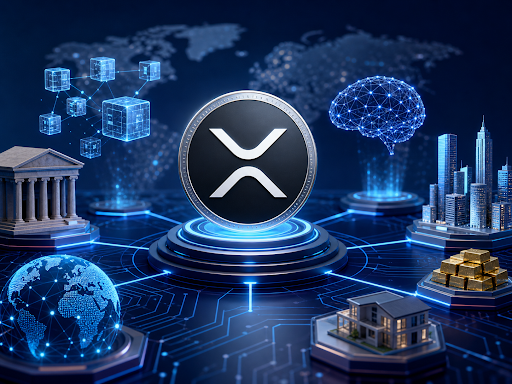
Blockchain technology is steadily moving from experimentation to implementation. As more financial institutions explore distributed ledger systems for payments, settlements, and asset tokenization, XRP adoption appears to be gaining momentum.
Ripple, the company closely associated with the XRP Ledger (XRPL), has long focused on enterprise solutions. Now, with increasing institutional blockchain use globally, XRP is once again entering the spotlight.
But what is actually driving adoption — and how significant is this shift?
Why Financial Institutions Are Turning to Blockchain
Banks and payment providers face ongoing challenges:
- Slow cross-border settlements
- High transaction costs
- Liquidity inefficiencies
- Complex correspondent banking networks
Blockchain technology offers potential improvements in speed, transparency, and cost reduction.
As institutions search for scalable solutions, networks like the XRP Ledger become relevant due to their efficiency and transaction capabilities.
How XRP Fits Into Institutional Infrastructure
XRP functions as a digital asset designed for fast value transfer. Within blockchain-based financial systems, it can serve as:
- A bridge asset for cross-border payments
- A liquidity solution for currency exchange
- A settlement layer for tokenized assets
- A cost-efficient transaction mechanism
The XRP Ledger’s fast confirmation times and relatively low fees make it technically suited for enterprise-grade use.
While adoption levels vary by region and regulation, interest in blockchain settlement infrastructure continues to grow.
XRP Ledger Growth and Network Activity
Beyond institutional announcements, on-chain activity provides insight into adoption trends.
Key indicators often include:
- Increasing transaction volumes
- Growth in active wallet addresses
- Validator participation expansion
- Tokenization experiments on XRPL
When both institutional exploration and on-chain metrics show growth, the broader ecosystem strengthens.
Tokenization and Real-World Asset Integration
One of the fastest-growing blockchain use cases involves tokenizing real-world assets such as:
- Bonds
- Stablecoins
- Commodities
- Digital securities
Financial institutions experimenting with tokenization may utilize blockchain networks that offer reliability and scalability.
As tokenization expands, blockchain infrastructure demand increases — potentially supporting ecosystem growth around networks like XRPL.
Institutional Confidence and Market Perception
Institutional participation often influences market sentiment.
When financial institutions increase blockchain integration, it can:
- Strengthen credibility
- Attract retail investors
- Increase liquidity
- Encourage developer innovation
However, institutional adoption does not always translate immediately into price movements. Market cycles and macroeconomic factors still play a significant role.
Challenges and Regulatory Considerations
Despite growing interest, challenges remain:
- Regulatory clarity differs across jurisdictions
- Compliance requirements can slow implementation
- Competition from other blockchain networks is strong
- Market volatility affects adoption pace
Institutions typically adopt cautiously, prioritizing long-term infrastructure stability.
What This Means for XRP’s Future
If financial institutions continue increasing blockchain use, and if the XRP Ledger remains positioned as an efficient settlement layer, long-term adoption could gradually strengthen.
XRP’s utility depends on:
- Real-world integration
- Network scalability
- Institutional partnerships
- Ongoing technical development
Sustained growth tends to build over time rather than overnight.
Market Context Still Matters
Even with improving adoption signals, XRP’s price outlook depends on broader market conditions, including:
- Bitcoin’s trend
- Global liquidity
- Macroeconomic stability
- Crypto investor sentiment
Adoption is a fundamental driver, but short-term price movements often reflect technical and macro forces.
Final Thoughts
The narrative around XRP adoption growing alongside increased financial institution blockchain use reflects a broader industry shift.
Blockchain is gradually moving into mainstream financial conversations. Ripple’s enterprise focus and the XRP Ledger’s infrastructure position it within that evolution.
While adoption metrics require ongoing observation, long-term ecosystem expansion remains one of the most important indicators for sustainable growth.
As the financial sector continues exploring digital transformation, blockchain infrastructure may play a larger role — and XRP’s position within that infrastructure will be closely watched.